Solving A Problem (Secondary Research)

  • “I’ve suffered through depression and anxiety my entire life. I just want these kids to know that depth that they feel as a human being is normal”

– Lady GaGa


  • “Depression never discriminates. It took me a long time to realise it but the key is not to be afraid to open up”

Dwayne Johnson


  • “Depression really got my life off track, but today I am living proof that someone can live, love and be well”

Demi Lovato


We thought using celebrity quotes would be a good idea because it might be very uplifting to the target audience, the idea was to convey that even though you go through a lot of negative vibes in their life they manage to stay at the top or even higher.


Questions for Students

(Stars represents the right answer)

What percentage of lesbian, gay and bisexual people suffer with mental health in Kent?

A)25%         B) 40% *


What percentage of sufferers of hate crime in Kent deal with mental health issues?

A) 60%*       B) 45%


What percentage of young adults leaving care end up suffering with mental health issues?

A) 60%      B) 80%*


What percentage of young adults leaving care end up suffering with mental health issues?

A) 25%*    B) 35%


This activity was inspired by the game show ‘I’m a celebrity get me out of here’, the idea of this is to guess the percentage of the question being given. We feel that this can create dialogue within the group, working as a team, creating conversation and also engaging with the target audience.
Solving a Problem Questionnaire (Primary Research)

  • The class consisted of 10 people; 5 answered the questionnaire and 5 left if blank (either because they didn’t feel comfortable giving out personal information or just didn’t want to generally do it.)


  • Anxiety appears to be the most common problem followed by depression, with this in mind I’ll be focusing a large amount of research on anxiety and depression as the anxiety and depression do cross over because their symptoms are similar.


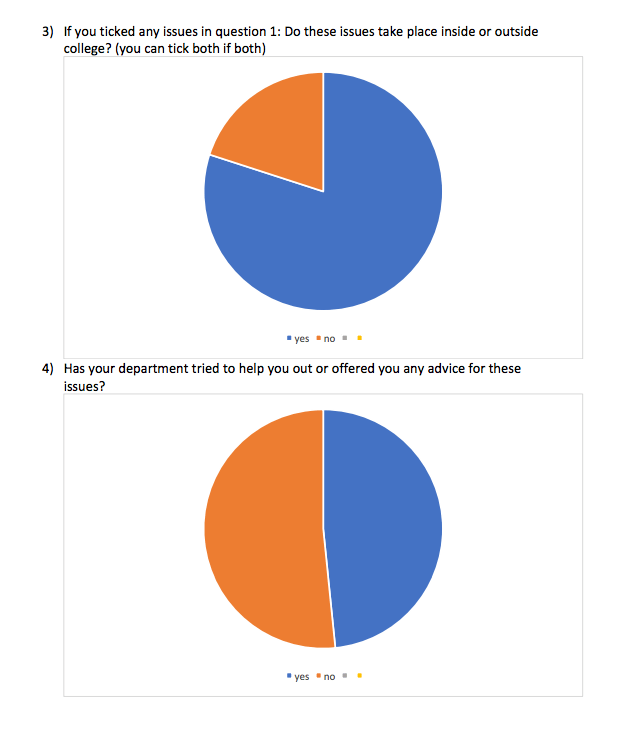
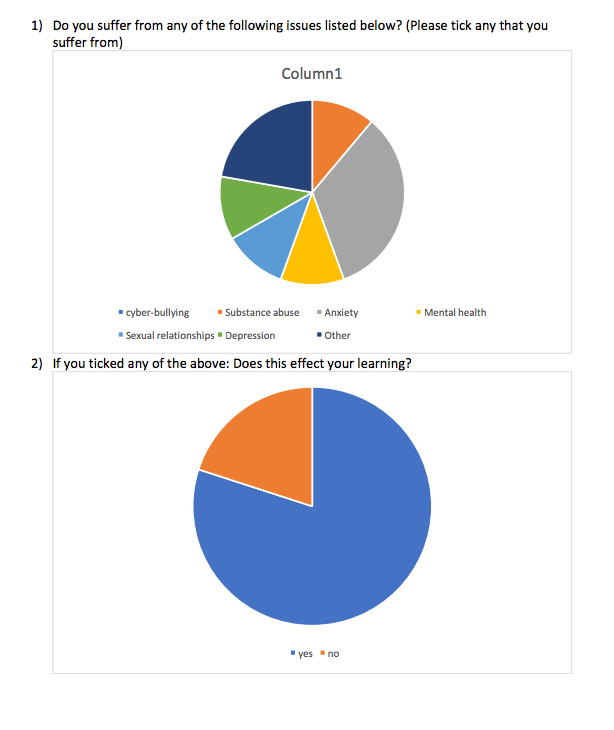
  • 80% of the students mentioned that the issues they have affects their learning at college. This is a big problem because this could effect them in the long run of their lives which in turn is going to give them a disadvantage in further education or getting a job.


  • Most people also mentioned that these issues take place within the college grounds, with the information collected, there is even more of a reason that this final piece is important as the issues are taking  place in the college environment which means that the target audience are easier to reach and makes it less difficult to communicate to the target audience and try and make more students aware and offering them some sort of support.


  • to an addition, most people also agreed that their department has not offered too much help or advice to challenge these issues which is why the final piece is important for staff iswell to be aware of these issues and how to challenge them in the future.


WHAT HAVE YOU LEARNT FROM YOUR FINDINGS?

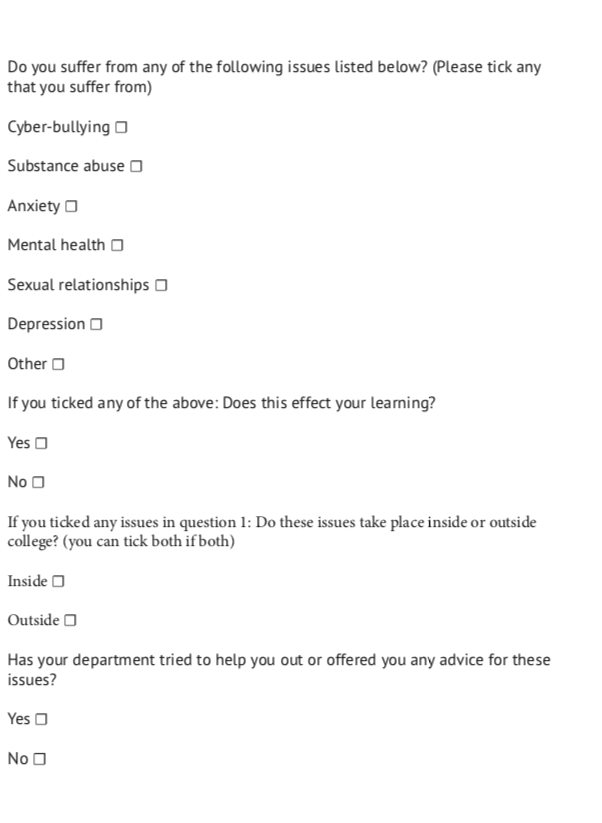
The first question on the questionnaire was ‘do you suffer from any of the following below? (please tick any that you suffer from)’ the results were……

33% of the students suffer from anxiety.

22% of the students have other issues that weren’t listed.

11% of the students suffer from substance abuse.

11% of the students have issues with sexual relationships.

11% of the students suffer from depression

11% of the students suffer from mental health


From these findings anxiety had the biggest percentage which determines the outcome of the main subject for the lesson, also depression was also picked as an additional subject as depression is very associated with anxiety.

Client meet

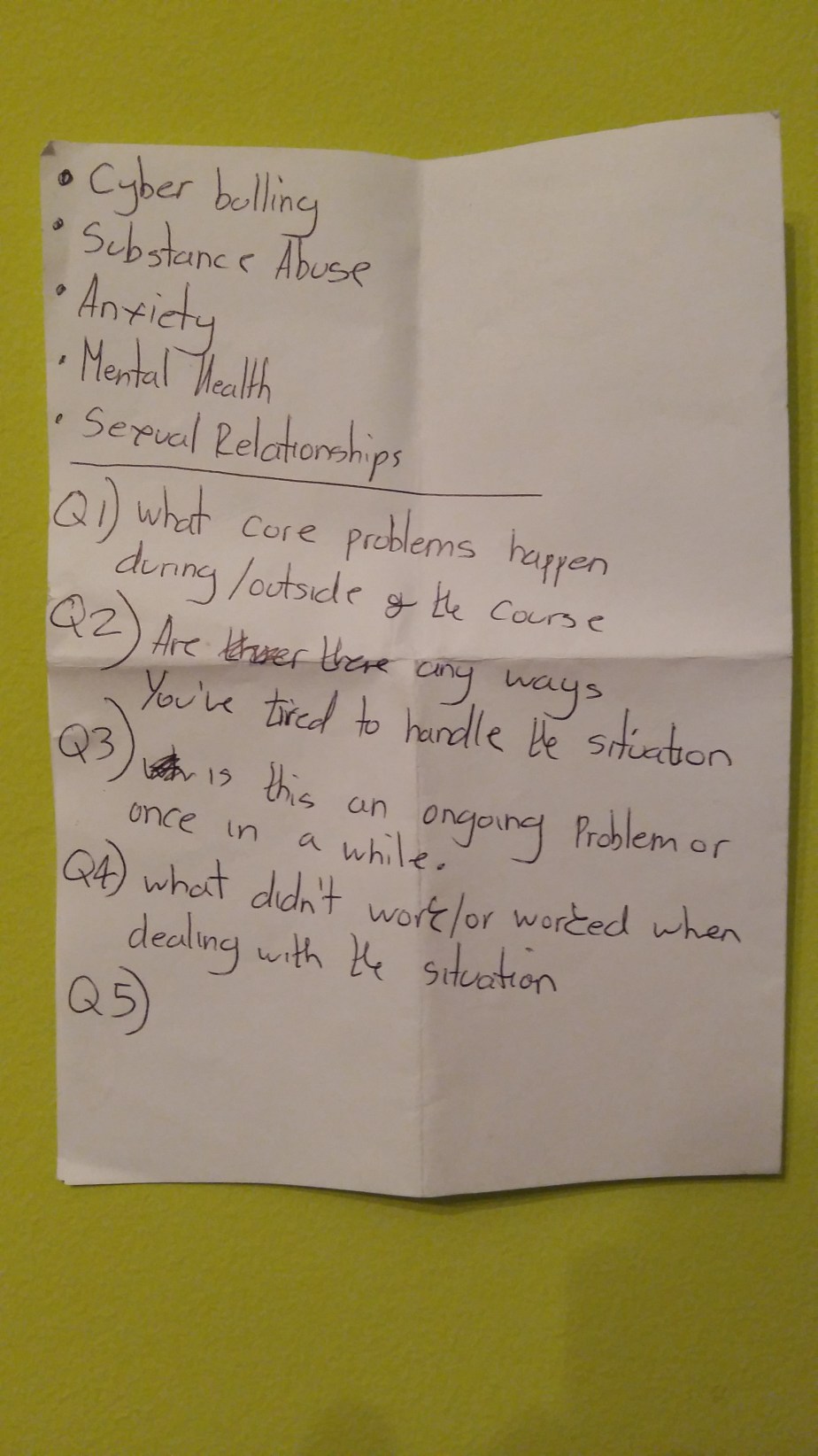
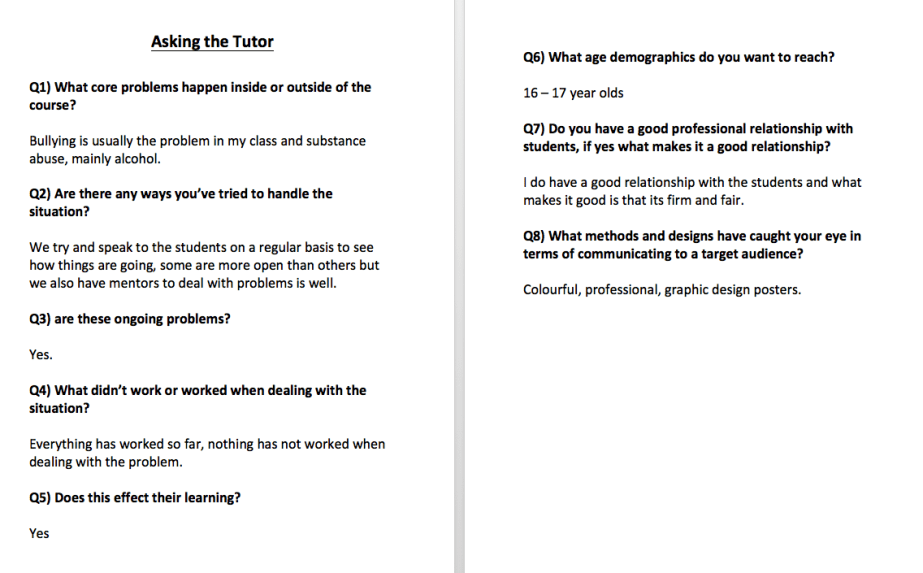
The aim with my colleague and I was to meet the client and to understand if they have witnessed any of these problems within or outside their department with students. whether it would be substance abuse, cyber-bullying, , mental health, anxiety, depression or any other related issues.

Screen Shot 2018-12-13 at 11.13.18

Screen Shot 2018-12-07 at 13.08.16Screen Shot 2018-12-07 at 13.08.29Screen Shot 2018-12-07 at 13.09.06

question sheet 2

bibliography

Kent.gov.uk. (2019). [online] Available at: https://www.kent.gov.uk/__data/assets/pdf_file/0015/15045/Kent-MH-Needs-Assessment.pdf [Accessed 17 Jan. 2019].

Final Posters & Evaluation

This slideshow requires JavaScript.

I am really satisfied about my final posters, they all convey a deep, impactful message about P.T.S.D and how the target audience would be impacted by them by their haunting yet eye catching design. If these posters were be printed and displayed, they would be A3 showcased near a hospital or in a hospital, at a bus stops as a bus is a common way people get from A to B, also train stations.

The posters are for the Mental Health Foundation, which is a British charitable organisation that provides information, carries out research, and campaigns to improve services for people affected by mental health problems.

SOLDIER FINAL POSTERS

The first soldier poster features words associated with P.T.S.D floating in the head area conveying a mind battle between the symptoms and the general mind. The words are red which will indicate a warning or danger of the words and the head being white symbolising hope. The is featured as really like the juxtaposition between the serious mood and tone of the poster and the smile which conveys happiness and peace of mind.

The second poster uses fragmented shapes to conveys isolation and poor state of mind, the background is black because it symbolises fear, mystery and death which the soldier is being haunted by.

EYE FINAL POSTERS

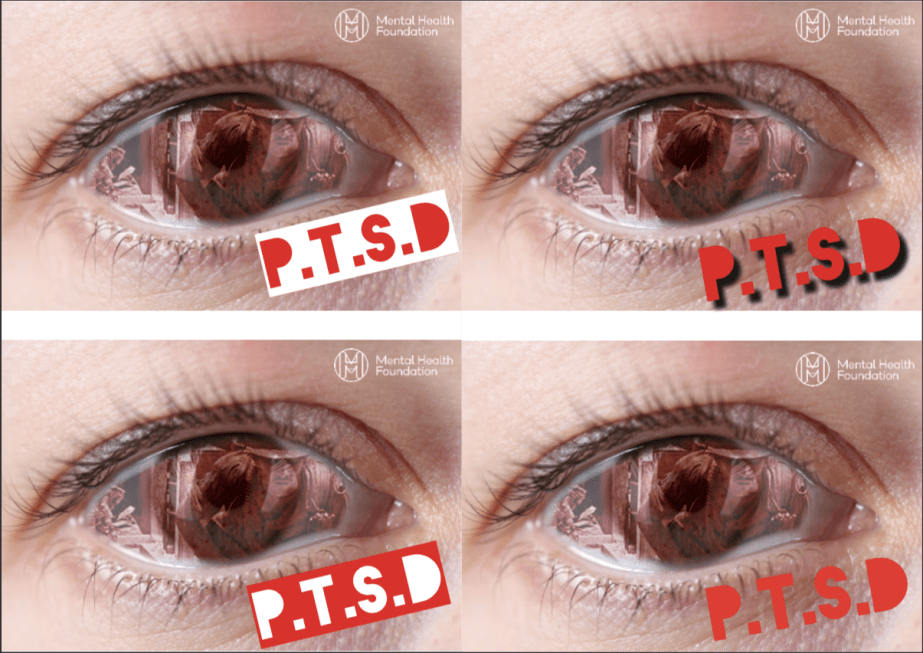
These posters were a success because the message is impactful showing imagery of conflict in the eye which creates the focal point of the poster and the blood red increases the engagement and dark tone. I chose different skin colours on both posters to avoid isolation towards any ethnic as anybody can have a mental illness.

WHAT WOULD YOU IMPROVE?

I would take my own images of an eye to experiment with different perspectives to make my posters look more different and interesting and use different people from different religions and backgrounds so even though the target audience is for people that knows someone or family member that has the condition, but also opens to a broad audience at the same time.

Eye & Face Experimentation


Screen Shot 2018-11-15 at 10.05.49

I asked my colleagues to choose which design was their favourite and what worked well with the typeface. Most of them picked the bottom left design because “The white against the red background makes the poster more engaging and would lead the target audiences eyes to the focal point; the red eye.


Screen Shot 2018-11-15 at 10.05.38

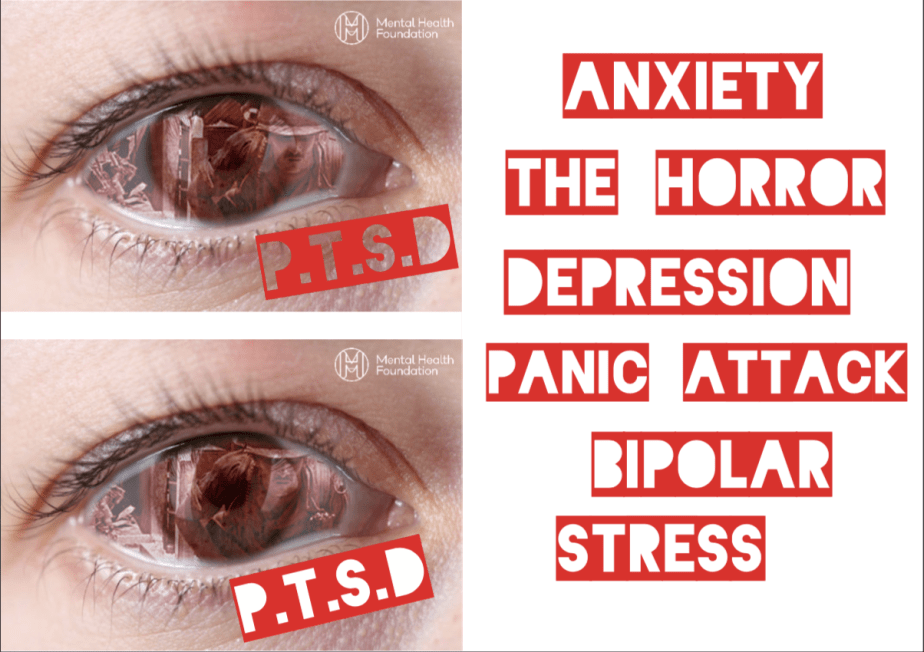
The chosen typeface is called ‘Blackout’ which is an ironic name for the subject matter. The colour choice was bright red as its an engaging colour which symbolizes warning, danger, blood, war and power. The words that I chose relate to P.T.S.D like the side effects  and mental illnesses during the P.T.S.D process.


Screen Shot 2018-11-15 at 10.05.28

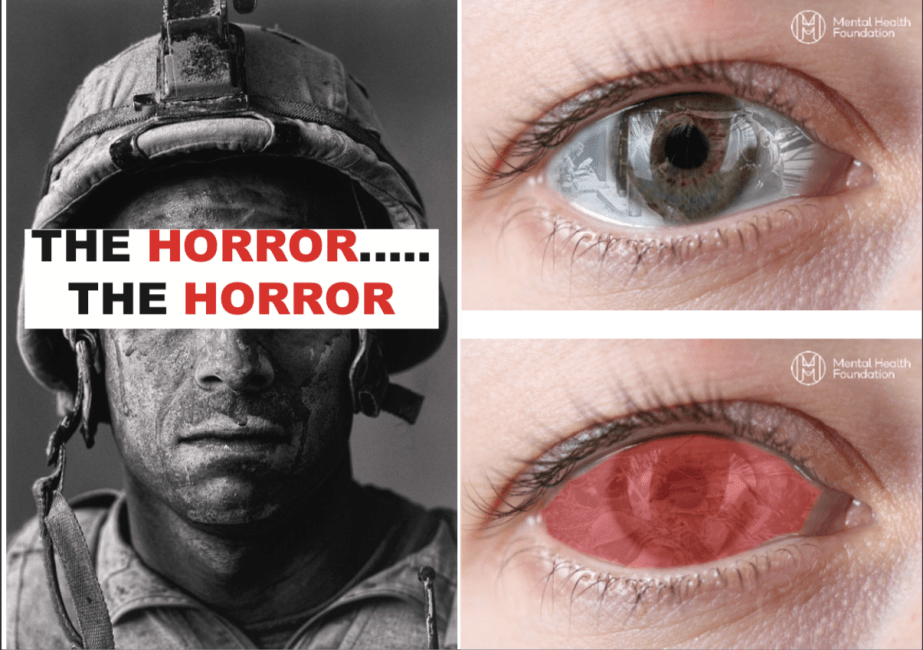
I experimented with text to see if it increased the dramatic effect to the posters, was relectant to include text as sometimes imagery speaks louder than words. The quote from the 1979 Vietnam film ‘Apocalypse Now’ “The Horror….The Horror” was included to convey a more sinister approach and referencing a cult film dealing with the same subject matter.


Screen Shot 2018-11-15 at 10.05.20

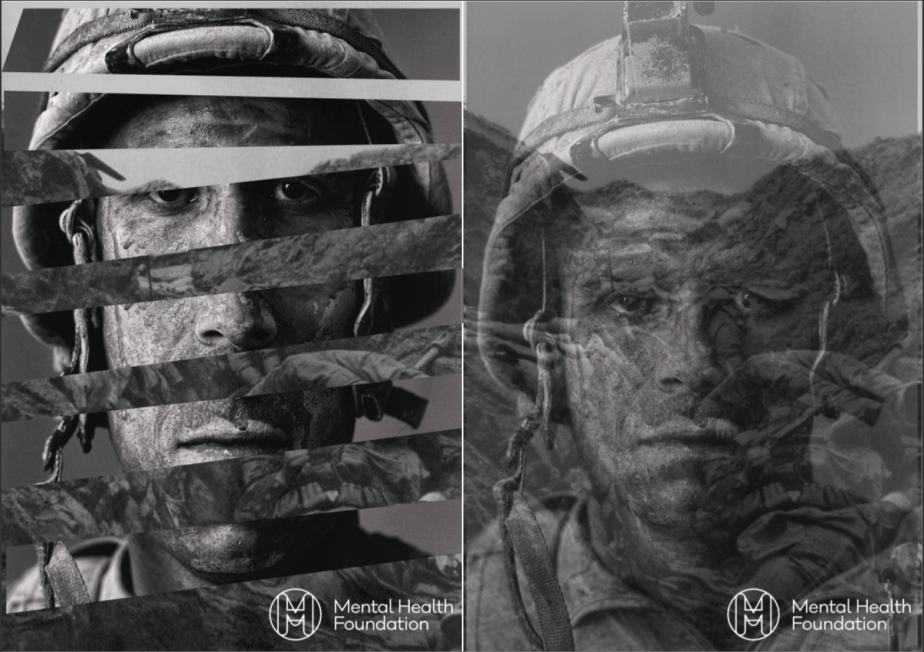
These poster designs convey a more haunting yet eye catching effect due to the distorted imagery The fragmented poster (Left) to influenced by my other fragmented designs, instead an image is placed behind the shapes revealing dead soldiers in trenches. The other poster (Right) users low opacity to reveal the same image making the poster more disturbing.


Screen Shot 2018-11-15 at 10.05.08

These experimentations visualise the mind and conveys strong events during conflict and what they see in the head everyday. The first experiment (Left) creates a haunting feel as the imagery covers the veterans eyes symbolizing power and mastery over the veteran like a disease. The second experiment (Right) is the same but features a smile, this was included as I wanted to create a juxtaposition between a serious message and a misleading visual giving it more attention and gives the target audience something to think about.


Screen Shot 2018-11-15 at 10.04.51

These experimentations are really effective as the fragmented shapes convey isolation, unforgotten and depression. The black and white increases the mood of the poster as it hits the target audience (people who know or a family member suffering from P.T.S.D) stronger including the sad facial expression from the veteran placed in the shapes. Which in a way makes the poster more sinister to look at. This also conveys that they’re mind is lost and is spiralling out of control.


This slideshow requires JavaScript.

This slideshow requires JavaScript.

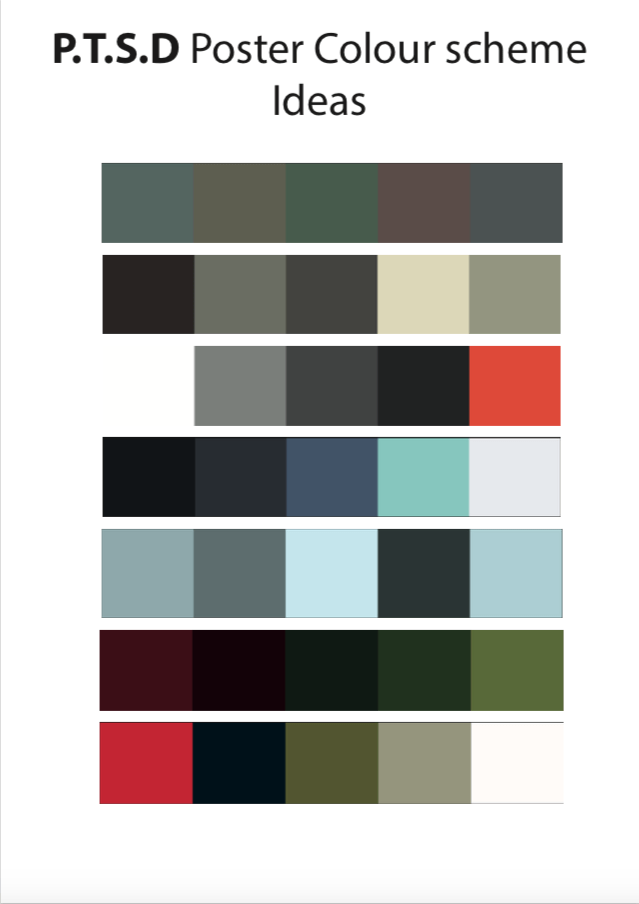
These are rough ideas of how to convey my message across to the target audience by using impacting imagery and dark tones of colour. This will increase its attention and message and hopefully raise eyebrows to the target audience.

Invisible Wounds – Break Down Documentary (50min)


20181031_094716

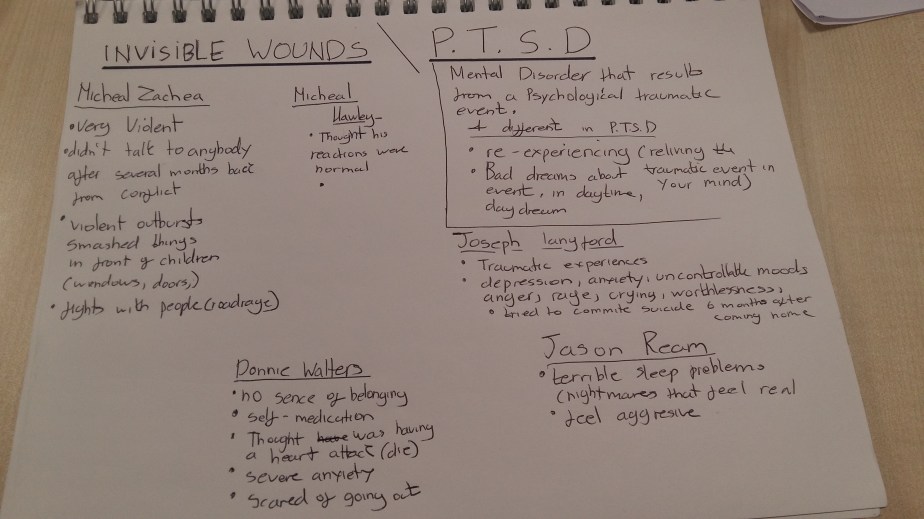
This documentary explores P.T.S.D (Post Traumatic Stress Disorder) the symptoms and difficulties veterans suffer after conflict and returning and adapting to a normal life again.


MY PROJECT, INTENTIONS & TARGET AUDIENCE

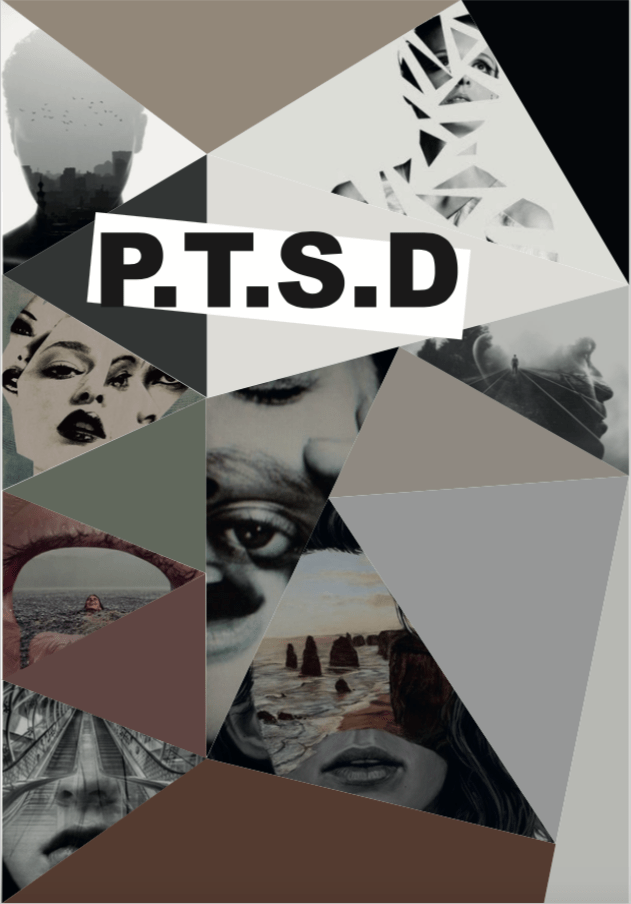
My project will be about veterans suffering from P.T.S.D (Post Truamatic Stress Disorder) and raising awareness of the condition. I will make posters which will be impacting and dark in tone to increase it’s message and more engaging. The Target audience will be people who know someone or family member that is suffering from this mental illness.


This slideshow requires JavaScript.


Bibliography

Carson, N. and Hamilton, R. (2018). 21 perfect font pairings. [online] Creative Bloq. Available at: https://www.creativebloq.com/typography/20-perfect-type-pairings-3132120 [Accessed 2 Nov. 2018].

Color.adobe.com. (2018). Adobe Color CC. [online] Available at: https://color.adobe.com/explore/?q=Depression [Accessed 2 Nov. 2018].

Mental Health Foundation. (2018). Home | Mental Health Foundation. [online] Available at: https://www.mentalhealth.org.uk [Accessed 15 Nov. 2018].